
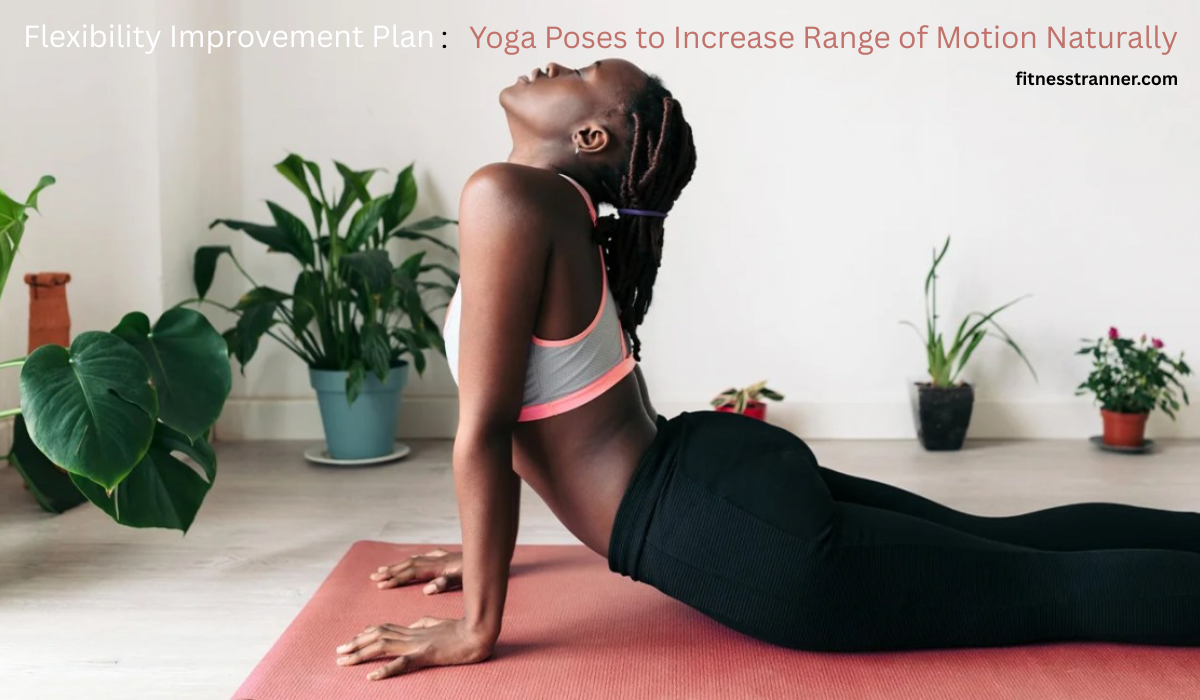
Improving flexibility is one of the most effective ways to enhance overall fitness, prevent injuries, and increase mobility. A well-structured flexibility improvement plan using yoga can help lengthen tight muscles, improve posture, and expand your range of motion safely. Whether you are an athlete, office worker, or beginner in fitness, yoga offers a sustainable and natural solution.
This comprehensive guide explains how to create a flexibility improvement plan and highlights powerful yoga poses that help increase range of motion.
Why Flexibility Matters
Flexibility is the ability of your muscles and joints to move through their full range without restriction or discomfort. Limited flexibility can lead to:
- Muscle stiffness
- Poor posture
- Reduced athletic performance
- Higher risk of injury
- Back and joint pain
A structured yoga routine improves blood circulation, reduces muscle tension, and supports joint health. Over time, consistent stretching increases elasticity in muscles and connective tissues.
How Yoga Improves Range of Motion
Yoga works by combining controlled breathing with deep, sustained stretches. Unlike quick static stretching, yoga encourages gradual muscle relaxation. This allows the body to safely extend beyond its usual limits.
Benefits of yoga for flexibility include:
- Increased muscle length
- Improved joint lubrication
- Better posture alignment
- Enhanced balance and coordination
- Reduced stress and tension
When practiced regularly, yoga increases mobility in hips, shoulders, spine, and hamstrings — areas where stiffness commonly develops.
Weekly Flexibility Improvement Plan
To increase range of motion effectively, follow this structured plan:
Beginner Plan (3 Days per Week)
- 20–30 minutes per session
- Focus on major muscle groups
- Hold each pose for 20–30 seconds
- Repeat 2 rounds
Intermediate Plan (4–5 Days per Week)
- 30–45 minutes per session
- Add deeper stretches
- Hold each pose for 40–60 seconds
- Incorporate breath control
Advanced Plan (5–6 Days per Week)
- 45–60 minutes per session
- Include dynamic flows
- Hold poses 60–90 seconds
- Add mobility drills
Consistency is more important than intensity. Gentle progress prevents strain.
Best Yoga Poses to Increase Range of Motion
Below are highly effective yoga poses known for improving flexibility and joint mobility.
1. Downward-Facing Dog
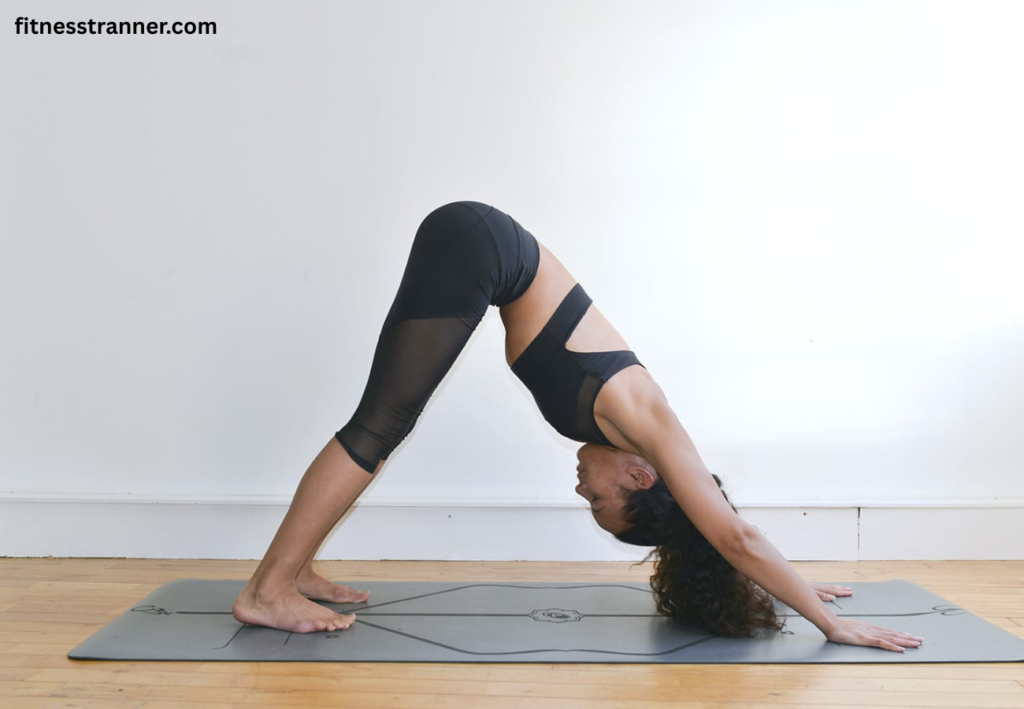
Target Areas: Hamstrings, calves, shoulders, spine
This foundational pose stretches the entire posterior chain. It improves shoulder mobility and lengthens the spine while increasing blood flow.
How to Perform:
- Start on hands and knees
- Lift hips upward forming an inverted V
- Keep heels reaching toward the floor
- Hold for 30–60 seconds
2. Low Lunge
Target Areas: Hip flexors, quadriceps
Tight hip flexors restrict range of motion, especially for those who sit long hours. Low Lunge deeply opens the hips and improves stride length.
How to Perform:
- Step one foot forward into lunge
- Lower back knee to the mat
- Lift chest and reach arms overhead
- Hold 30–45 seconds per side
3. Seated Forward Fold
Target Areas: Hamstrings, lower back
This pose increases flexibility in the hamstrings and spine, helping reduce stiffness.
How to Perform:
- Sit with legs extended
- Inhale and lengthen spine
- Exhale and fold forward
- Hold for 40–60 seconds
4. Butterfly Pose
Target Areas: Inner thighs, hips
Butterfly Pose improves hip rotation and groin flexibility.
How to Perform:
- Sit with soles of feet together
- Gently press knees toward floor
- Keep spine straight
- Hold 30–60 seconds
5. Pigeon Pose
Target Areas: Deep hip rotators
Pigeon Pose is excellent for releasing deep hip tension and increasing mobility.
How to Perform:
- Bring one knee forward
- Extend opposite leg back
- Lower torso gently forward
- Hold 45–60 seconds per side
6. Cat-Cow Pose
Target Areas: Spine mobility
This dynamic movement improves spinal flexibility and reduces stiffness.
How to Perform:
- On hands and knees
- Alternate arching and rounding the back
- Repeat 10–15 slow breaths
7. Cobra Pose
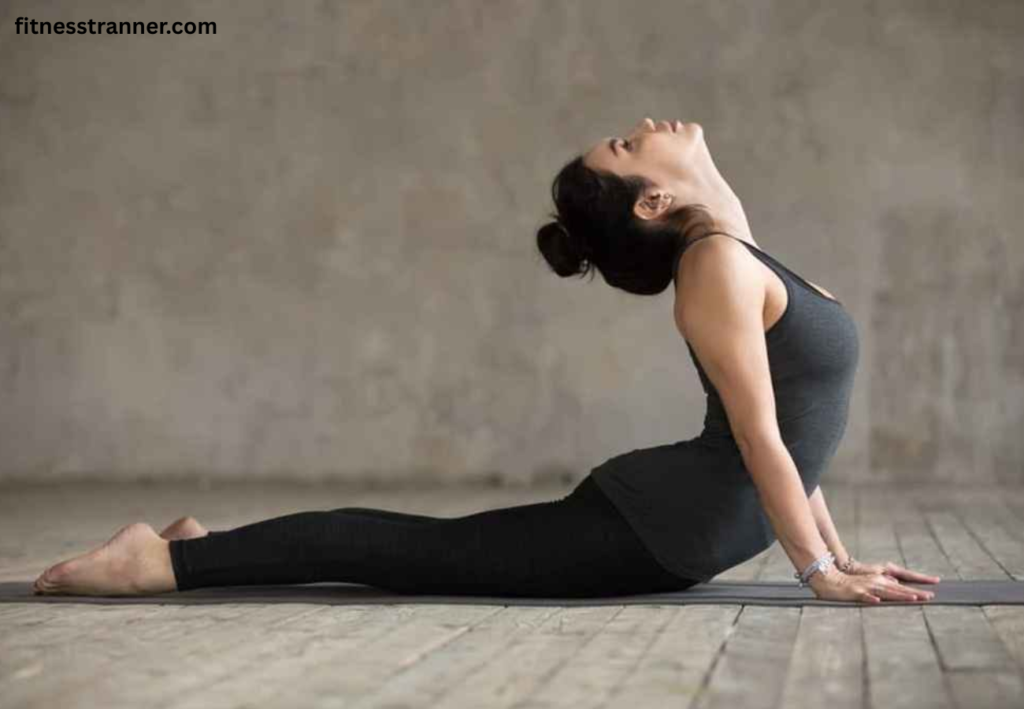
Target Areas: Chest, shoulders, spine
Cobra increases spinal extension and improves posture.
How to Perform:
- Lie on stomach
- Press palms into floor
- Lift chest gently
- Hold 20–40 seconds
Tips for Faster Flexibility Gains
- Warm Up First – Never stretch cold muscles.
- Focus on Breath – Deep breathing relaxes muscles.
- Avoid Bouncing – Slow, controlled movements prevent injury.
- Stay Consistent – Practice at least 3 times weekly.
- Hydrate Well – Muscles need proper hydration to remain elastic.
Common Mistakes to Avoid
- Forcing deep stretches too quickly
- Ignoring pain signals
- Skipping rest days
- Holding breath during stretches
- Poor posture alignment
Flexibility improves gradually. Patience is essential.
How Long Does It Take to See Results?
With consistent practice:
- Noticeable improvement in 2–3 weeks
- Increased range of motion in 4–6 weeks
- Significant flexibility gains in 8–12 weeks
Results depend on age, consistency, and muscle tightness.
Who Should Follow This Plan?
This flexibility improvement plan is ideal for:
- Gym enthusiasts
- Athletes
- Office workers
- Beginners in yoga
- Individuals recovering from stiffness
If you have injuries or medical conditions, consult a healthcare professional before starting.
FAQ – Flexibility Improvement Plan & Yoga for Range of Motion
1. How often should I practice yoga to improve flexibility?
For noticeable flexibility improvement plan, practice yoga at least 3–5 times per week. Beginners can start with 20–30 minutes per session, while intermediate practitioners can extend to 40–45 minutes. Consistency is more important than intensity.
2. How long does it take to increase range of motion with yoga?
Most people begin noticing improved mobility within 2–3 weeks of regular practice. Significant gains in range of motion usually appear within 6–12 weeks, depending on body stiffness and commitment.
3. Which yoga pose is best for tight hamstrings?
Seated Forward Fold is highly effective for stretching tight hamstrings. It lengthens the back of the legs and improves spinal Flexibility Improvement Plan when practiced regularly.
Table of Contents
Final Thoughts
A structured flexibility improvement plan using yoga poses is one of the safest and most effective ways to increase range of motion. By incorporating poses like Downward-Facing Dog, Low Lunge, and Pigeon Pose into your weekly routine, you can gradually unlock tighter muscles and improve joint mobility.
Flexibility Improvement Plan is not achieved overnight — it is built through consistency, patience, and mindful practice. Start slowly, stay regular, and allow your body to adapt naturally. Flexibility Improvement Plan enhances posture, reduces injury risk, and supports overall well-being. Begin today, and experience the long-term benefits of increased mobility and strength.
Related posts:
 12 Gentle Yoga Poses To Help You Beat Body Stiffness
 How Yoga Helps You Build Strength: आपको ताकतवर: शुरुआती लोगों के लिए पूरी गाइड
 Yoga Mat Deals: बेस्ट योगा मैट ऑफर्स, कीमत, क्वालिटी और खरीदने की पूरी गाइड
 How to start yoga:आज से शुरुआती लोगों के लिए संपूर्ण मार्गदर्शिका और पहला योग फ्लो
Powered by YARPP.