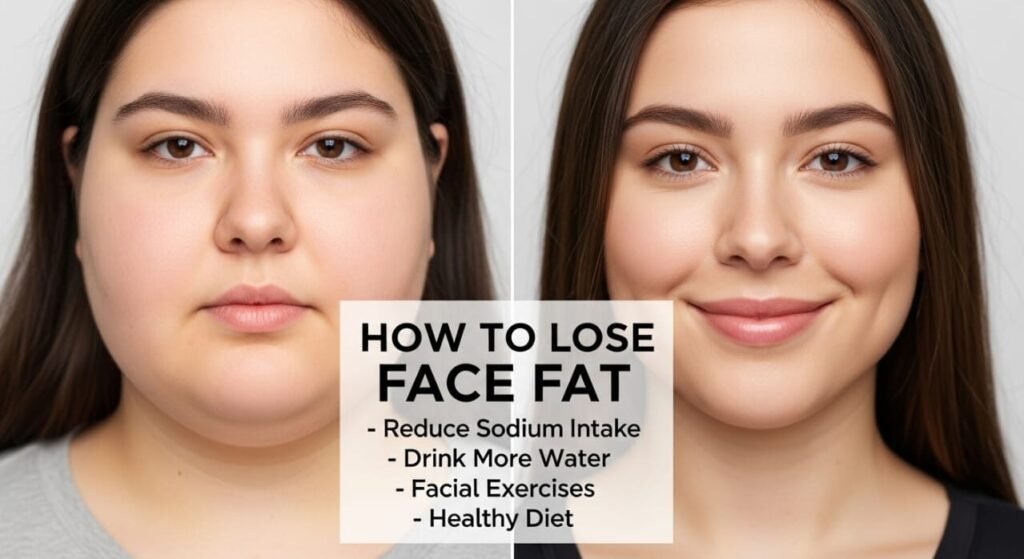
Why Face Looks Fat or Puffy
Facial fullness is usually caused by a mix of:
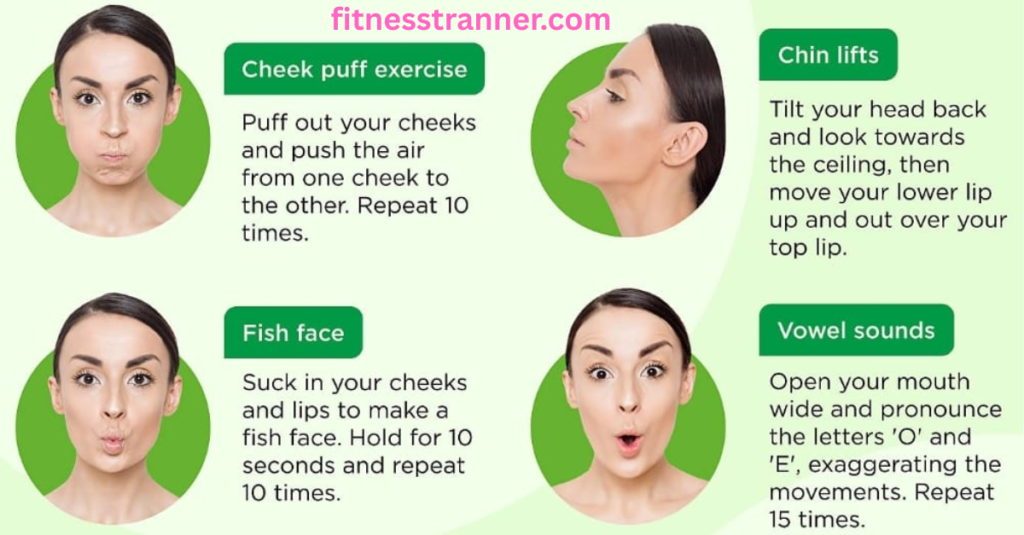
If you want to lose face fat very most important lose face fat exercise.
- Overall body-fat percentage
- Water retention (bloating)
- High-sodium or high-sugar diet
- Alcohol consumption
- Lack of sleep / stress
- Hormonal changes
- Genetics & bone structure
You cannot spot-reduce fat from the face, but when overall body fat decreases, the face is one of the first places to show change.
Proven Ways to Reduce Face Fat (Scientifically Supported)
Maintain a Mild & Sustainable Calorie Deficit
Crash dieting makes the face look:
If you want to lose face fat very most importantlose face fat exercise.
- Saggy
- Aged
- Deflated
Instead, aim for slow fat loss:
- Target: 0.25 – 0.5 kg per week
- Prioritize:
- Lean protein
- Whole foods
- Fiber-rich carbs
- Healthy fats
Helpful meal structure:
- Protein + vegetables at every meal
- Complex carbs in moderation
- Avoid overeating late at night
Prioritize Strength Training + Regular Cardio
Best formula for total-body fat loss:
- Strength training → 2–3× weekly
- Cardio → 120–150 minutes/week
Strength training:
- Boosts metabolism
- Preserves muscle
- Prevents skinny-fat face look
Cardio helps reduce:
- Stored body fat
- Puffiness
- Water retention
Walking, cycling, brisk jogging, or swimming all work.
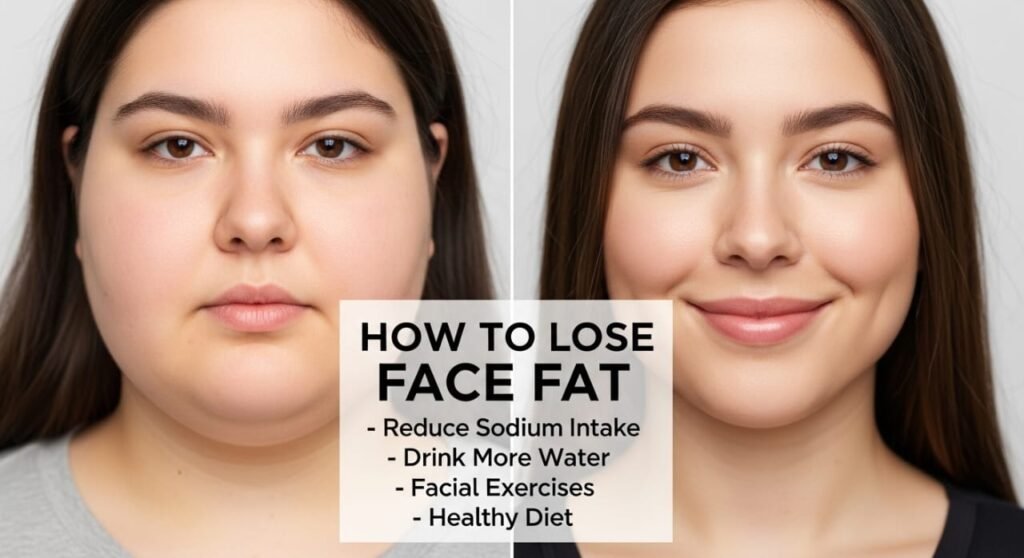
Reduce Bloat-Causing Foods
These don’t add fat but cause swelling:
If you want to lose face fat very most important lose face fat exercise.
Avoid / reduce:
- Processed or salty foods
- Packet soups & instant noodles
- Sugary drinks
- Deep-fried foods
- Excess alcohol
Increase:
- Water intake
- Fresh fruits & vegetables
- Potassium-rich foods (banana, avocado, spinach)
Hydration helps flush excess sodium.
Improve Sleep & Stress Levels
Lack of sleep increases cortisol → leads to:
- Water retention
- Face swelling
- Fat storage
Aim for:
- 7–9 hours daily
- Fixed sleeping schedule
- No caffeine late evening
Stress-relief habits:
- Walking
- Meditation
- Stretching
- Journaling
Limit Liquid Calories & Sugary Beverages
Common hidden contributors to facial fullness:
- Milk teas
- Sweetened coffee
- Energy drinks
- Fruit juices
- Alcohol mixers
Better alternatives:
- Water
- Black coffee (moderate)
- Unsweetened tea
- Coconut water (occasional)
Short-Term De-Puffing Tips (If Swelling, Not Fat)
For morning puffiness or sodium retention:
- Use cold compress / chilled face roller
- Sleep with head slightly elevated
- Avoid alcohol or salty meals at night
- Stay hydrated before bed
- Try moderate facial massage (for lymph drainage)
These reduce swelling, not fat — but help facial shape look sharper.
Myths & Things That Don’t Actually Burn Face Fat
If you want to lose face fat very most important lose face fat exercise.
Avoid wasting time or money on:
- Face yoga / facial exercise gadgets
- Jaw-chewing devices
- Slimming creams or oils
- Detox teas or extreme fasting
They may tighten muscles temporarily —
but they do not reduce fat.
Genetics & Natural Face Shape Matter
Some people naturally have:
- Rounder cheeks
- Fuller jawline
- Softer features
Bone structure + fat distribution vary from person to person.
You can improve:
Fat level
Puffiness
Definition
…but you cannot change bone structure — and that’s normal.
When to See a Doctor
If you want to lose face fat very most important lose face fat exercise.
Seek medical advice if you notice:
- Sudden facial swelling
- Rapid weight gain
- Swelling in hands or legs
- Severe fatigue
- New medications (especially steroids)
These can be linked to:
- Thyroid imbalance
- Kidney issues
- Hormonal changes
Final Sammary (Face Fat Reduction Roadmap)
To naturally slim your face:
✔ Lose overall body fat slowly
Strength train + regular cardio
Reduce sodium, sugar & alcohol
Drink enough water
Sleep well & manage stress
Use de-puffing methods short-term
Step 1 — Understand Your Weight Category
You can estimate your range using BMI (only as a rough guide):
if you want to lose face fat very most important lose face fat exercise.
Then compare:
- < 18.5 → Underweight
- 18.5 – 24.9 → Normal weight
- 25 – 29.9 → Overweight
- 30+ → Obese
Face-fat strategy changes based on this.
If You’re Underweight or Very Lean
A fuller face here is usually due to:
- Bloating / sodium retention
- Stress / sleep problems
- Dehydration
- Hormonal changes
Do not try to lose more body fat.
What to do instead
- Increase calories slightly (nutrient-dense foods)
- Drink enough water throughout the day
- Reduce salty packaged foods
- Limit alcohol and late-night meals
- Sleep 7–9 hours
- Manage stress
Short-term de-puffing habits:
- Cold compress in morning
- Gentle lymphatic face massage
- Sleep with head slightly elevated
Your goal = reduce puffiness, not fat loss.
If You’re Normal Weight
Facial fullness is often from:
If you want to lose face fat most important lose face fat exercise.
- Water retention
- Diet quality
- Body-fat distribution
Best approach
Create a small, slow calorie deficit:
- Aim to lose 0.25–0.5 kg per week
- Eat:
- Protein each meal
- Vegetables & fiber
- Whole carbs in moderation
- Healthy fats (olive oil, nuts, seeds)
Training plan:
- Strength training → 2–3× weekly
- Cardio / brisk walking → 120–150 min weekly
Lifestyle habits that slim the face:
- Reduce salty & processed foods
- Cut sugary drinks + liquid calories
- Limit alcohol (especially at night)
- Maintain consistent sleep
Results are usually noticeable in 4–8 weeks.
If You’re Overweight
Face slim-down comes mainly from total fat loss.
Recommended target:
- 0.5–1 kg per week
- 20–25% calorie deficit (not crash dieting)
Nutrition focus:
- High-protein meals (helps avoid face sagging)
- Big portions of vegetables
- Replace fried / processed foods
- Avoid sweetened drinks & cream coffees
Movement plan:
- Cardio most days (walking, cycling, jogging)
- Strength training 2–3× weekly
- preserves muscle
- prevents “skinny-fat” face
Extra tips to reduce puffiness while losing fat:
- Drink water regularly
- Avoid heavy salty dinners
- Sleep 7–8 hours
Visible face changes → 3–6 weeks for many people.
If You’re Obese or Have High Body-Fat
Facial fullness is primarily fat-storage related.
Your priority = safe, steady weight loss
- Work toward 1% of body weight per week
- Focus on sustainable lifestyle change
- Consider guidance from a nutritionist / doctor
Core habits:
- Protein + vegetables at each meal
- Replace refined carbs with whole-food options
- Walk daily (even 20–30 mins helps)
- Sleep + stress control
As body fat drops, the face:
- sharpens around cheeks & jawline
- loses puffiness
- looks more defined
First visible change → often 2–4 weeks.
Things That Do NOT Burn Face Fat
Avoid wasting time on:
- Face yoga / jaw exercisers
- Slimming lotions / creams
- Detox teas or extreme fasting
- Chewing devices
They may change muscle tension or water retention, but not fat.
When to Seek Medical Advice
Get checked if face swelling is:
- sudden
- uneven
- painful
- accompanied by rapid weight gain, fatigue, or swelling in legs/hands
- linked to new medications (e.g., steroids)
These may indicate hormonal or thyroid causes.
Bottom-Line Roadmap (Weight-Smart Face Slimming)
Lose body fat gradually (no crash diets)
Strength train + regular cardio
Reduce salt, alcohol, sugary drinks
Stay hydrated
Sleep & manage stress
Use de-puffing methods short-term
Face changes usually appear in 4–12 weeks, depending on your weight category.
If you are normal fitness